Pelagic Perspective
Cosmetic Doesn't Always Mean Inexpensive
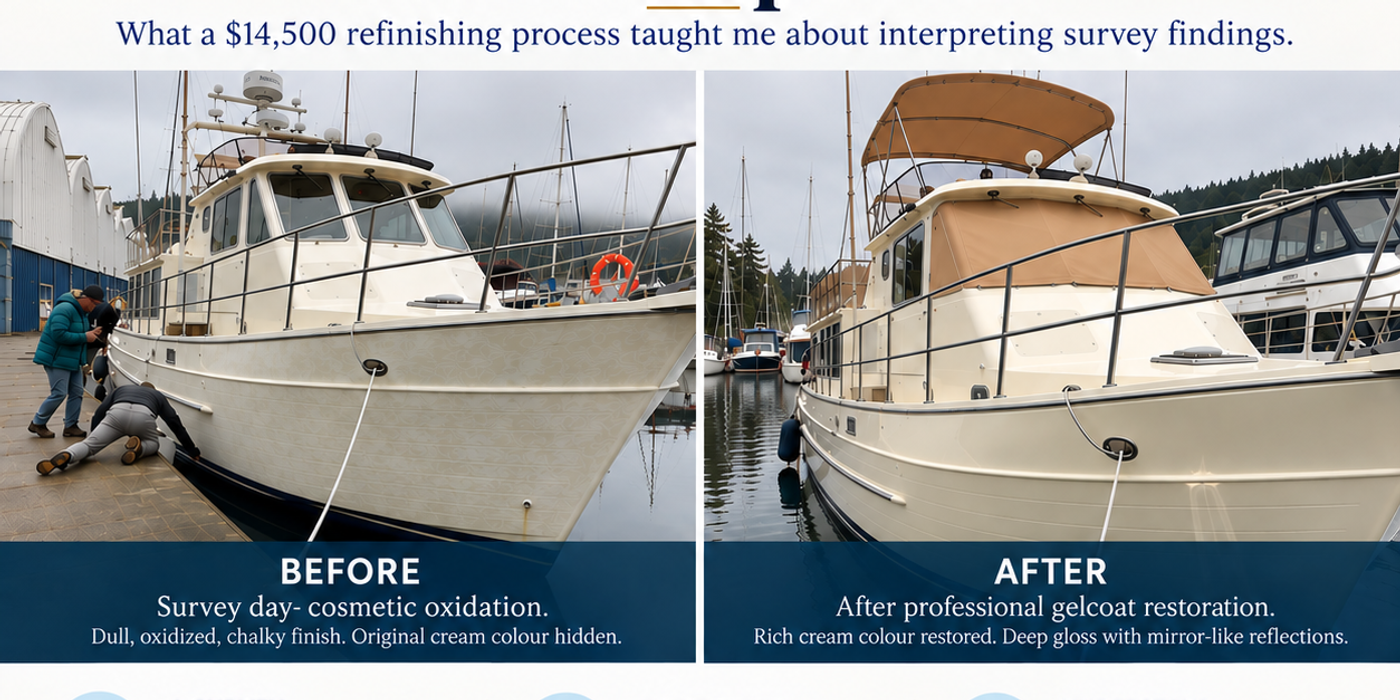
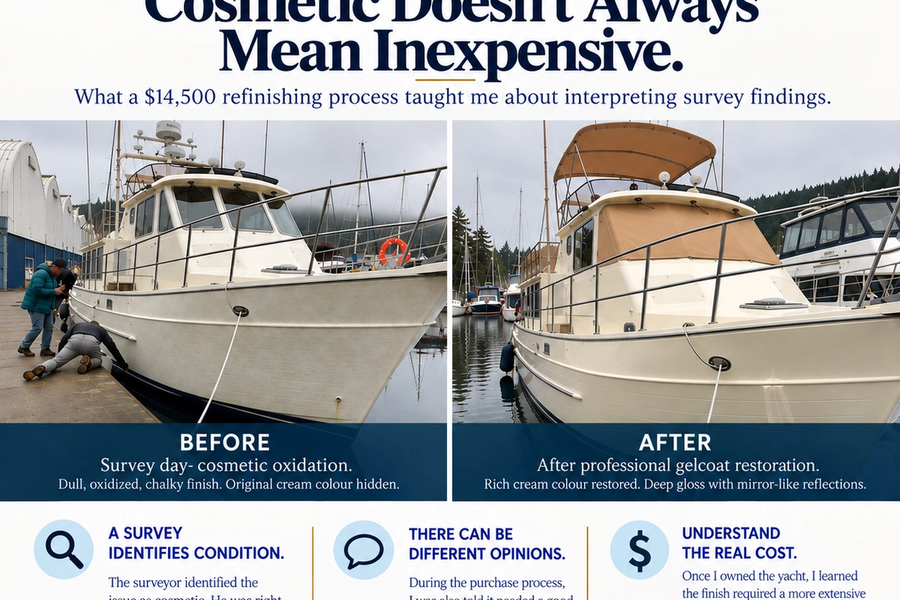
The photo on the left was taken during the survey when I was buying this yacht.
I knew the exterior needed attention. The finish was dull and oxidized, and the surveyor identified the condition as cosmetic. During the purchase process, I was also told that what the yacht really needed was a good wash and polish.
That seemed straightforward enough.
It wasn't quite that simple.
Cosmetic, But Not Inexpensive
After taking ownership, I had the finish properly assessed by professionals.
Restoring it wasn't going to be a matter of simply washing the yacht and applying some polish. The condition of the finish required a much more extensive restoration process, including wet sanding as part of the professional waxing and polishing work.
The result was excellent. The original cream colour and gloss came back and the difference was dramatic.
So was the bill.
The cost was approximately $14,500.
Importantly, the surveyor hadn't missed a structural problem. The condition really was cosmetic.
That distinction became the lesson.
Cosmetic doesn't necessarily mean inexpensive.
A Survey Finding and Its Financial Impact Are Two Different Things
Marine surveys appropriately focus considerable attention on the condition and safety of the vessel.
As buyers, we naturally do the same.
We worry about engines, generators, electrical systems, electronics, plumbing, hull condition and the other findings that can appear in a survey report.
When something is described as cosmetic, it's easy to mentally put it into a different category: something that can be dealt with later and probably won't materially affect the purchase decision.
But cosmetic condition can carry a substantial price tag, particularly as yachts become larger.
My mistake wasn't failing to recognize that the exterior needed attention. I could see that.
What I underestimated was what it would actually cost to bring the yacht to the standard I wanted after the purchase.
Those are two very different questions.
Look Beyond the Survey Finding
This experience changed the way I think about pre-purchase decisions.
When an issue is identified, I don't think the buyer should stop at:
What is wrong with it?
There are several additional questions worth asking:
- What will it take to correct it?
- What will that realistically cost?
- Is that cost reflected in what I'm prepared to pay for the yacht?
- And what other work am I likely to want to complete after closing?
Individually, some of those items may not be reasons to walk away from an otherwise good yacht.
Collectively, however, they can materially change the economics of the purchase.
The Purchase Price Isn't the Whole Purchase Decision
A yacht can survey reasonably well and still require significant spending immediately after closing.
Cosmetics, canvas, electronics, tender replacement, upholstery, deferred maintenance and personal upgrades can quickly become meaningful numbers.
That's why I believe buyers should think beyond simply negotiating the purchase price.
There is also a post-purchase capital requirement: the money required to turn the yacht you've purchased into the yacht you actually want to own.
In this case, one seemingly straightforward cosmetic issue represented approximately $14,500 of that number.
Knowing that before closing wouldn't necessarily have stopped me from buying the yacht.
But it would have allowed me to make the decision with better information.
And that's the point.
The Lesson
The surveyor correctly identified the condition as cosmetic.
What I learned through ownership was the financial significance of correcting it.
That's why one of the lessons I now apply to yacht purchase decisions is simple:
Don't just ask what needs attention. Ask what it will actually cost to bring the yacht to the standard you expect.
That number belongs in the purchase decision too.
Better Information. Better Decisions.
Pelagic Perspectives shares practical lessons from real-world yacht ownership and decision-making.
Gallery